
Held Forms – A Green Woodturning Collection by Liz Pearson
This new collection of green turned wooden vessels and bowls began with a simple intention: to explore what happens when control is loosened and the natural movement of wood is allowed to shape the final piece.
Using locally sourced timber, I created a series of thin-walled vessels, bowls and sculptural forms designed to distort as they dried. Rather than aiming for perfectly symmetrical objects, I became increasingly interested in movement, tension and irregularity — allowing shrinkage, bark inclusions and natural warping to become part of the finished work.
The collection was developed alongside a busy teaching schedule at Love Heartwood Turning School in Berkshire, which meant the project evolved more slowly and organically than originally planned. Although I wasn’t able to push the work as far conceptually as I had hoped, the process opened up several exciting directions that I now want to explore further.

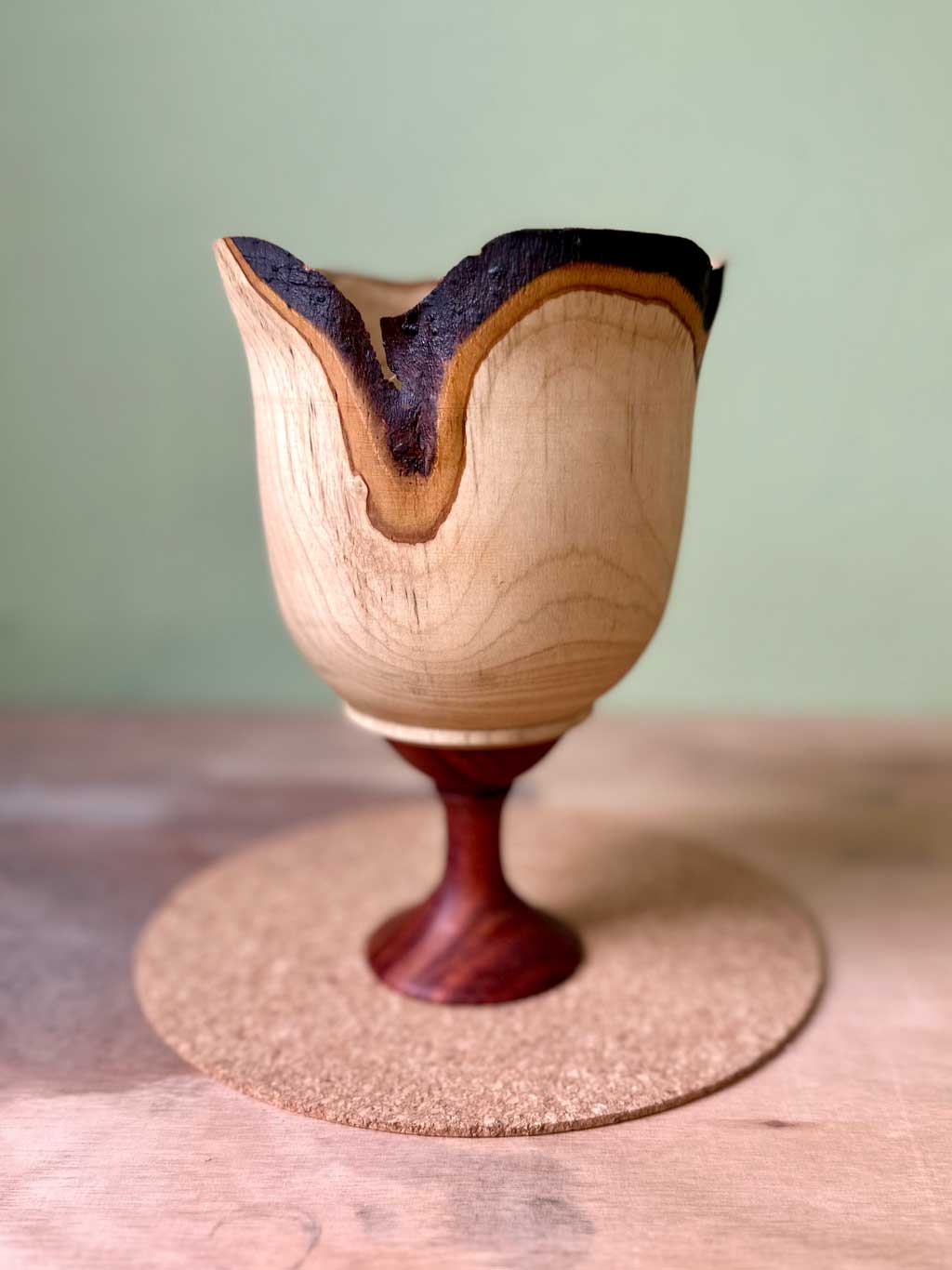
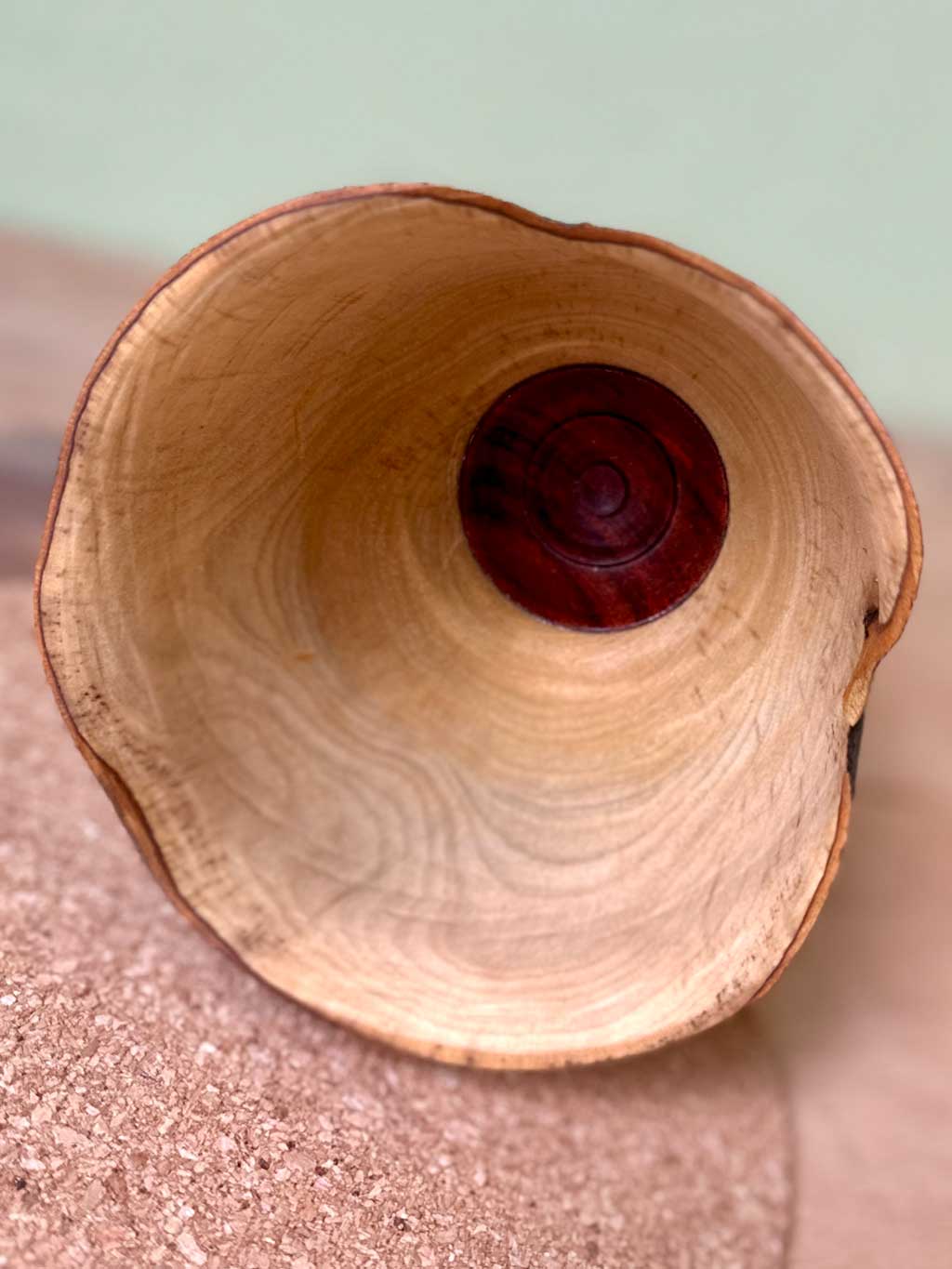
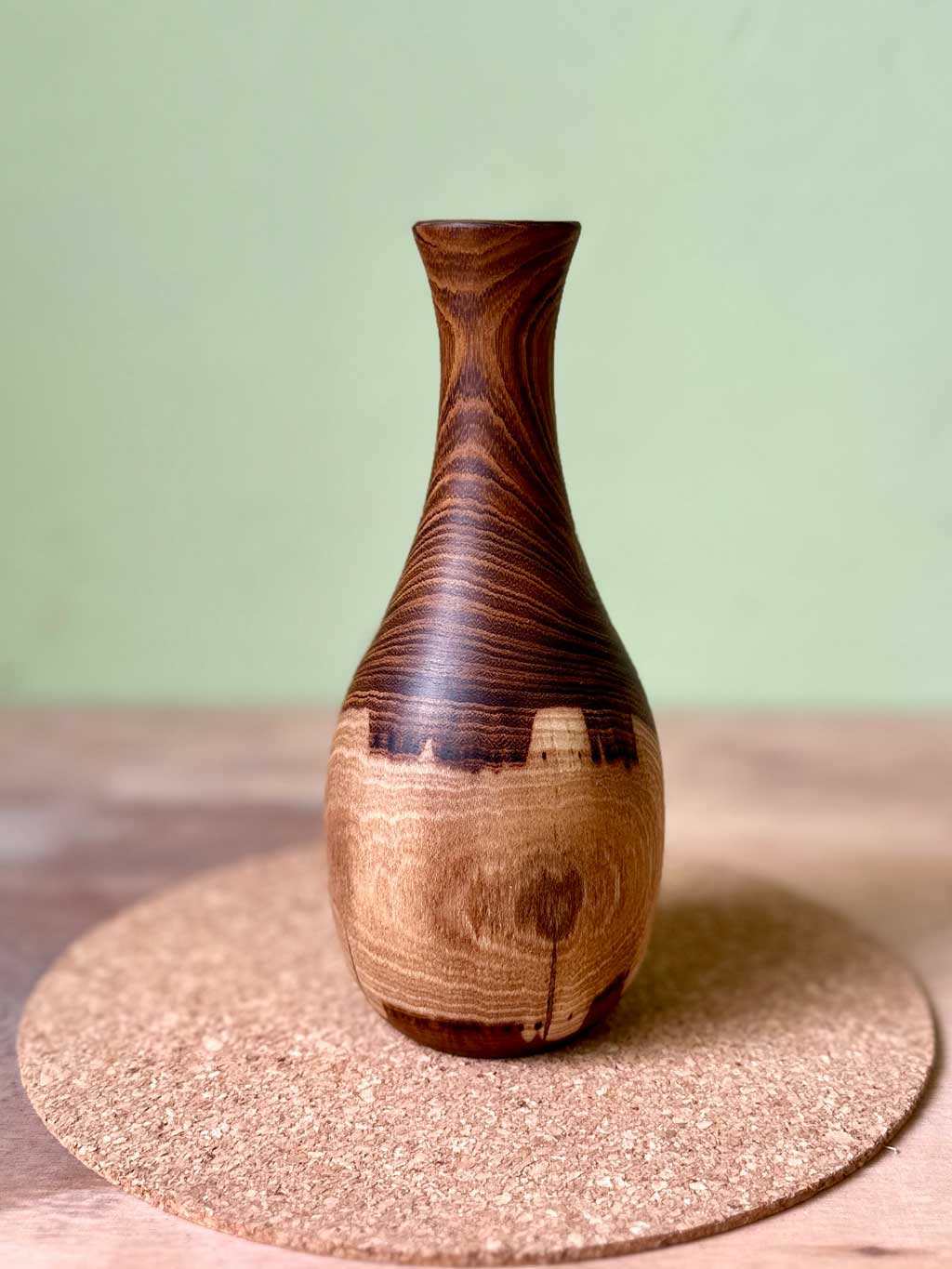
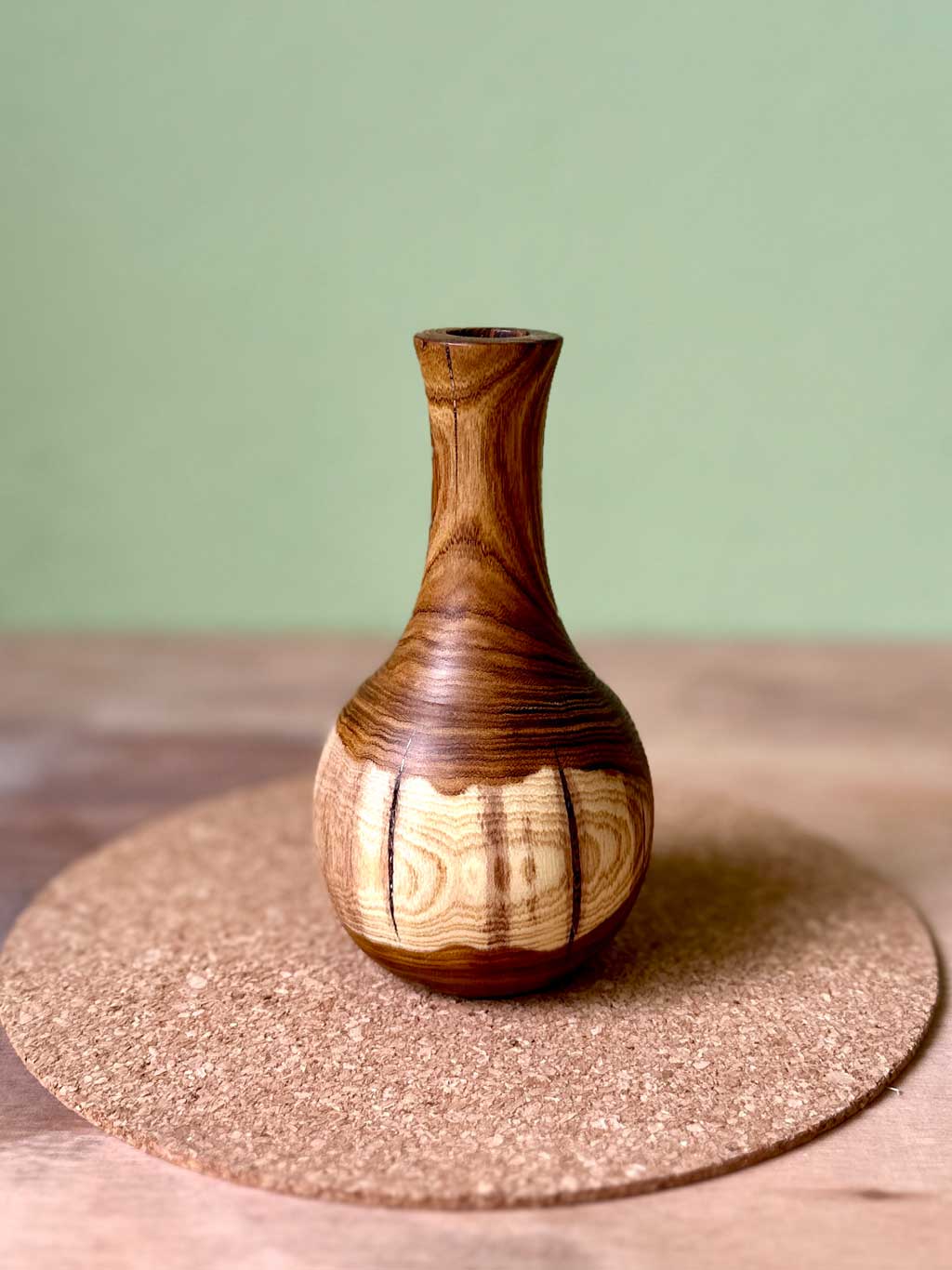
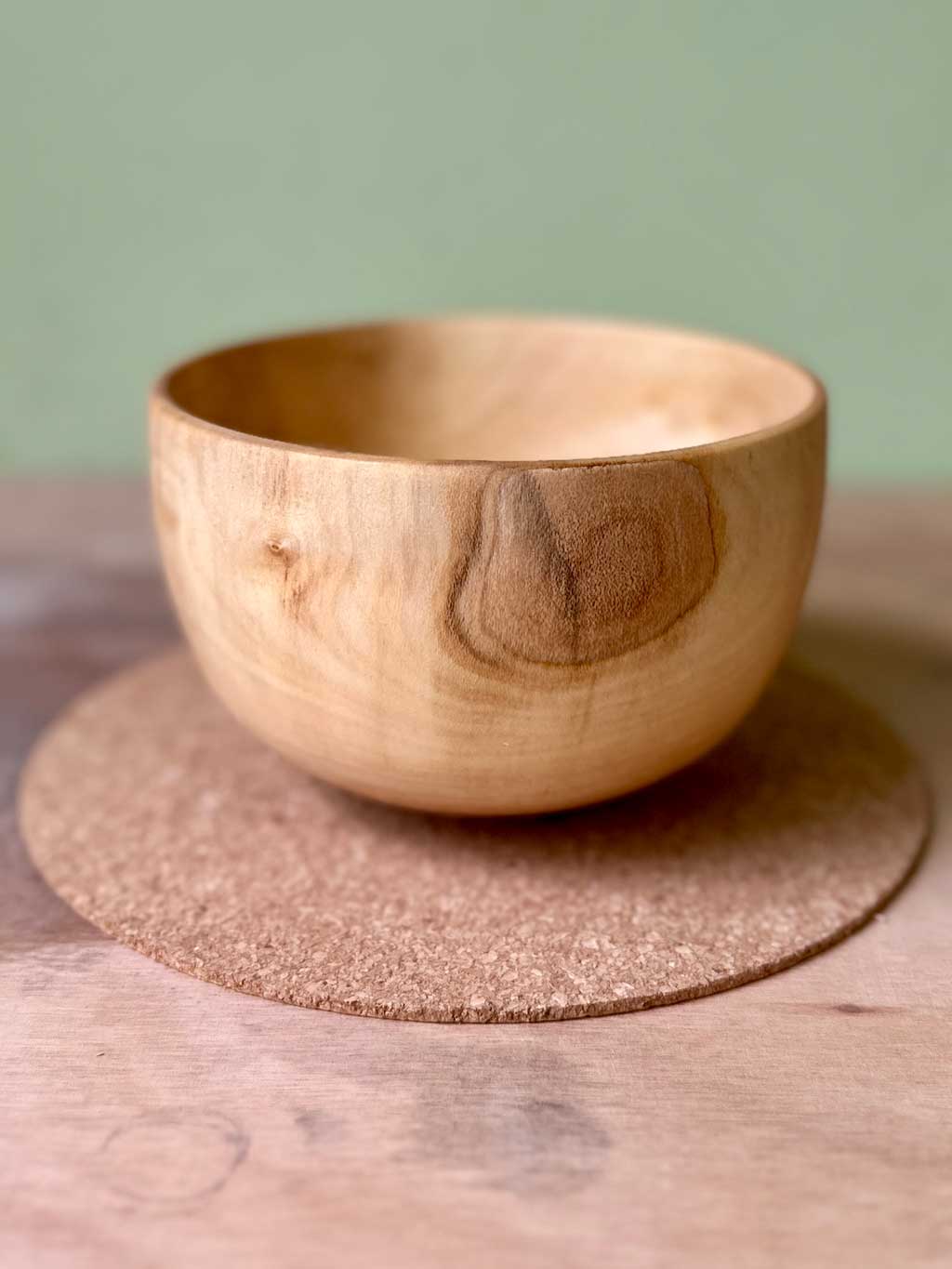
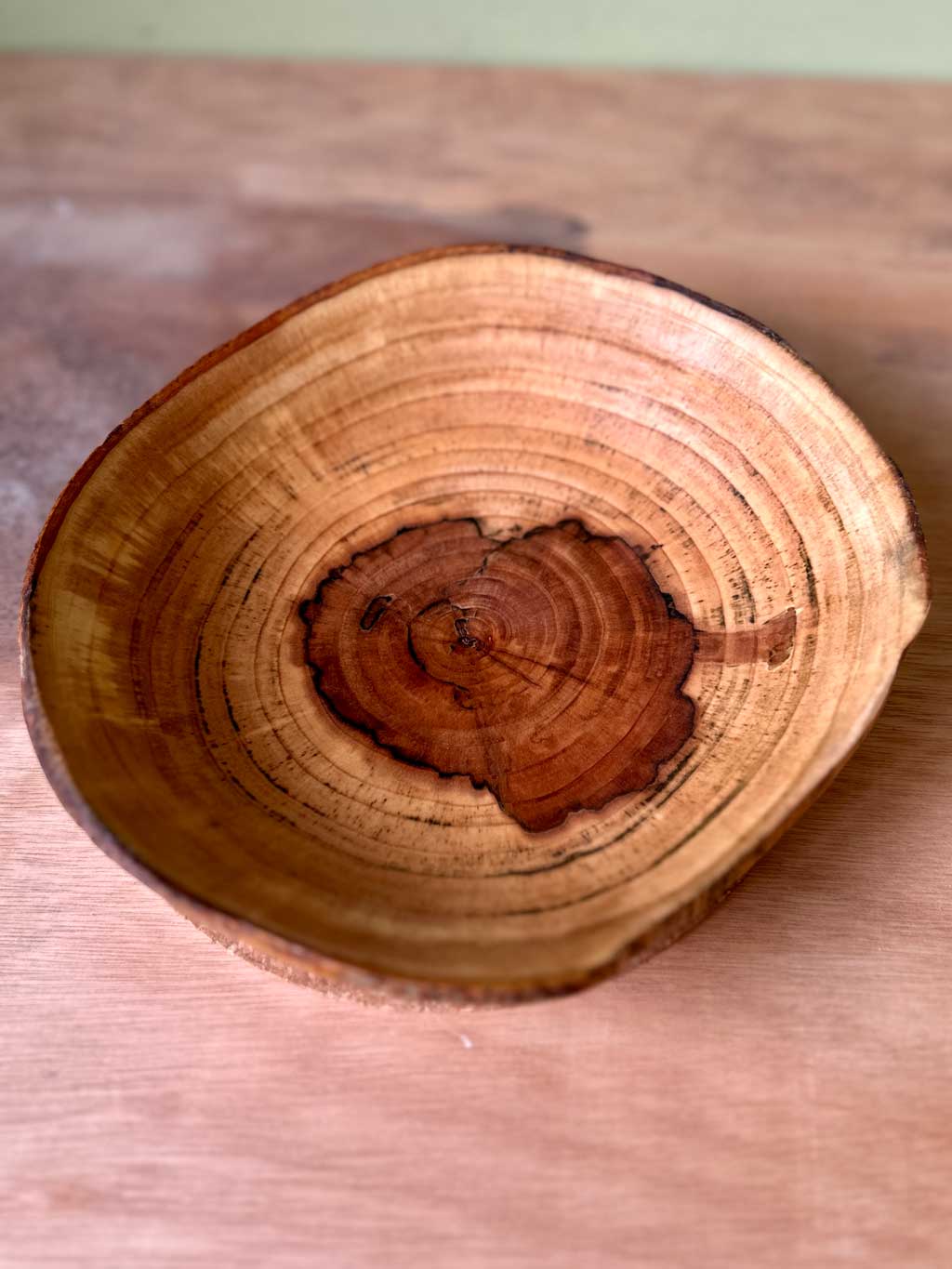
Unfolding – Bay – 13 x 19 cm. This piece was an exploration in end grain hollowing to create a delicate, thin walled vessel. 
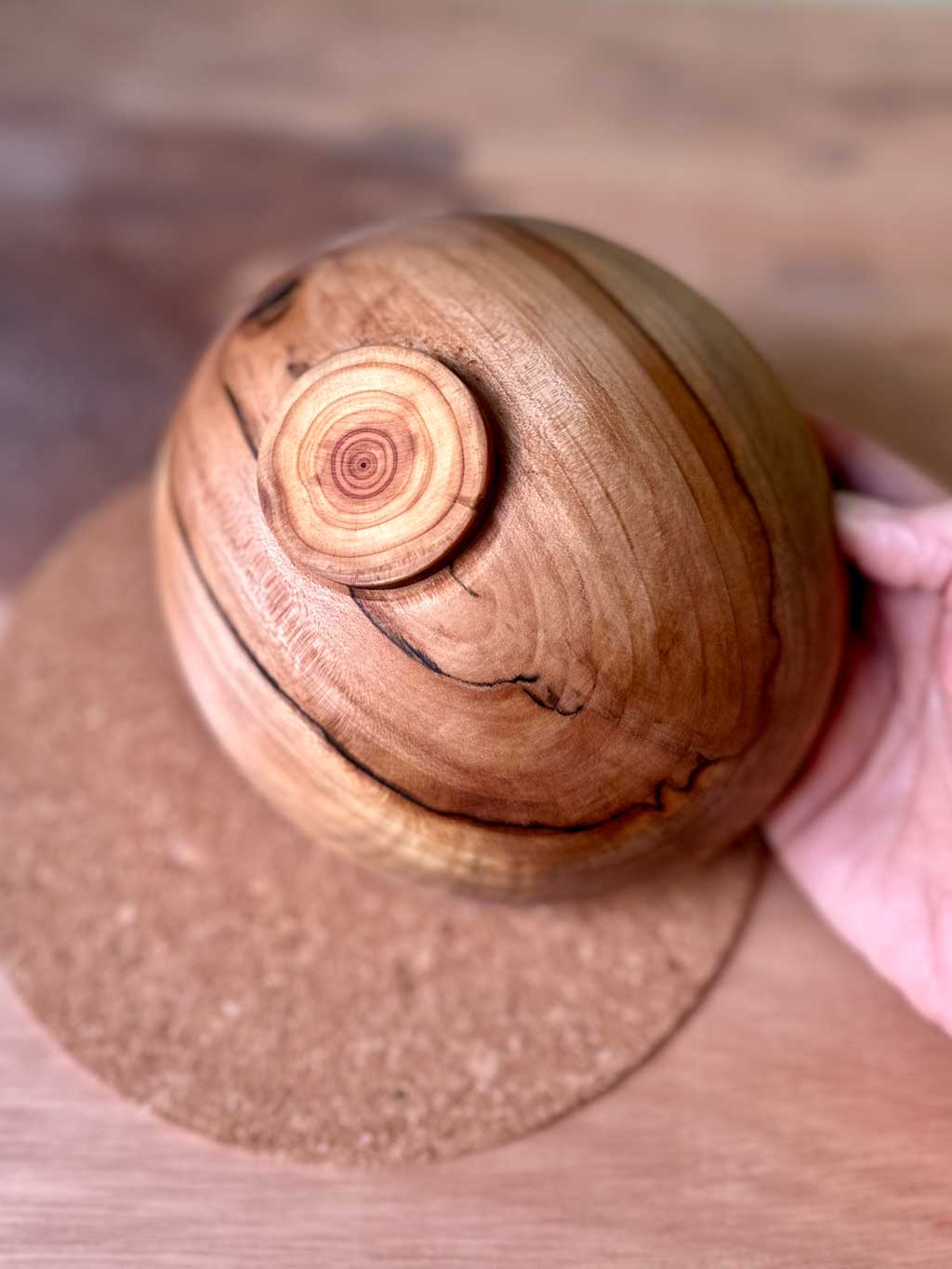
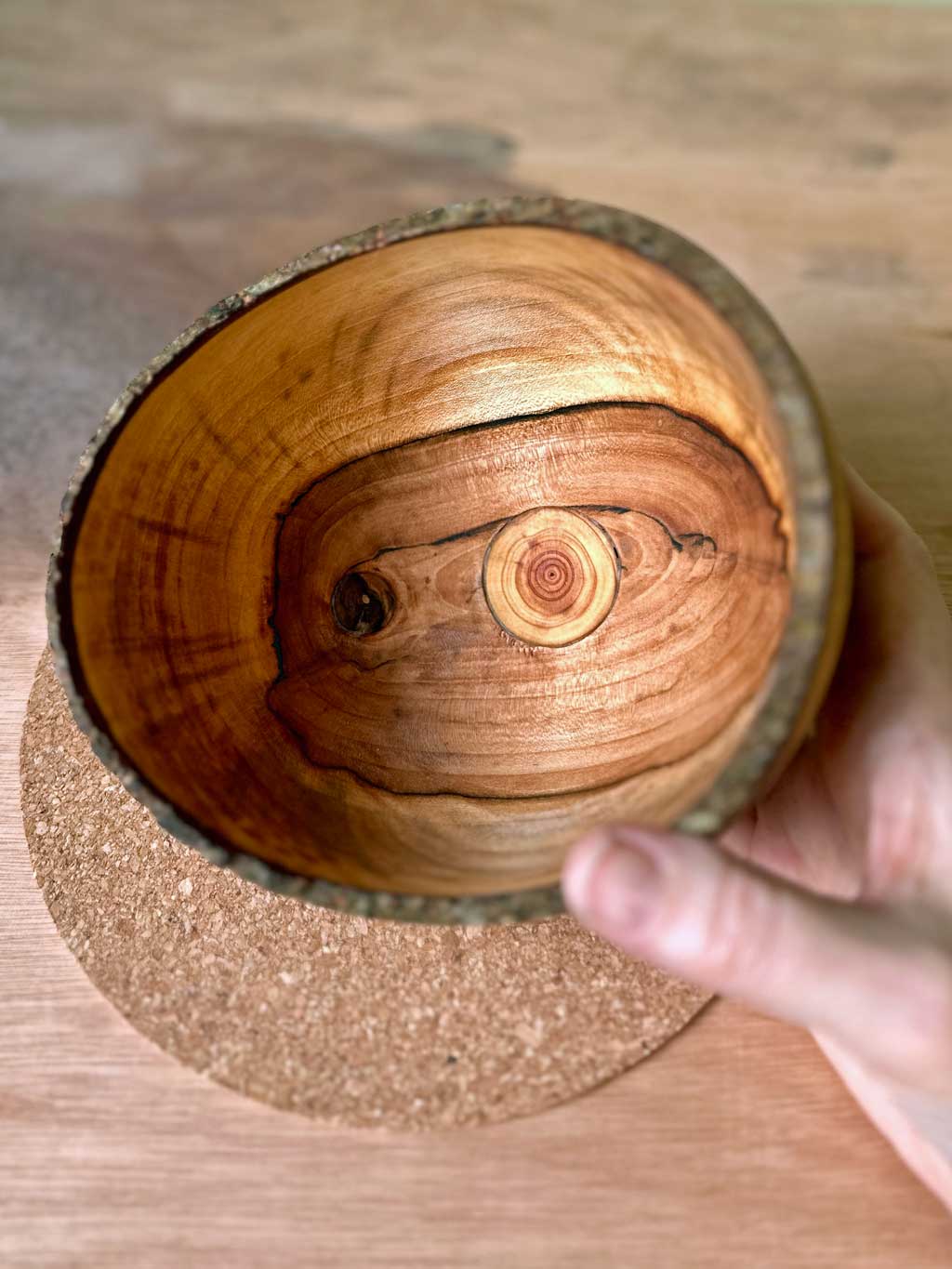
Held Open – Rowan – 16.5 x 11 cm. A vessel whose shape shifted from round to oval as moisture left the timber. 
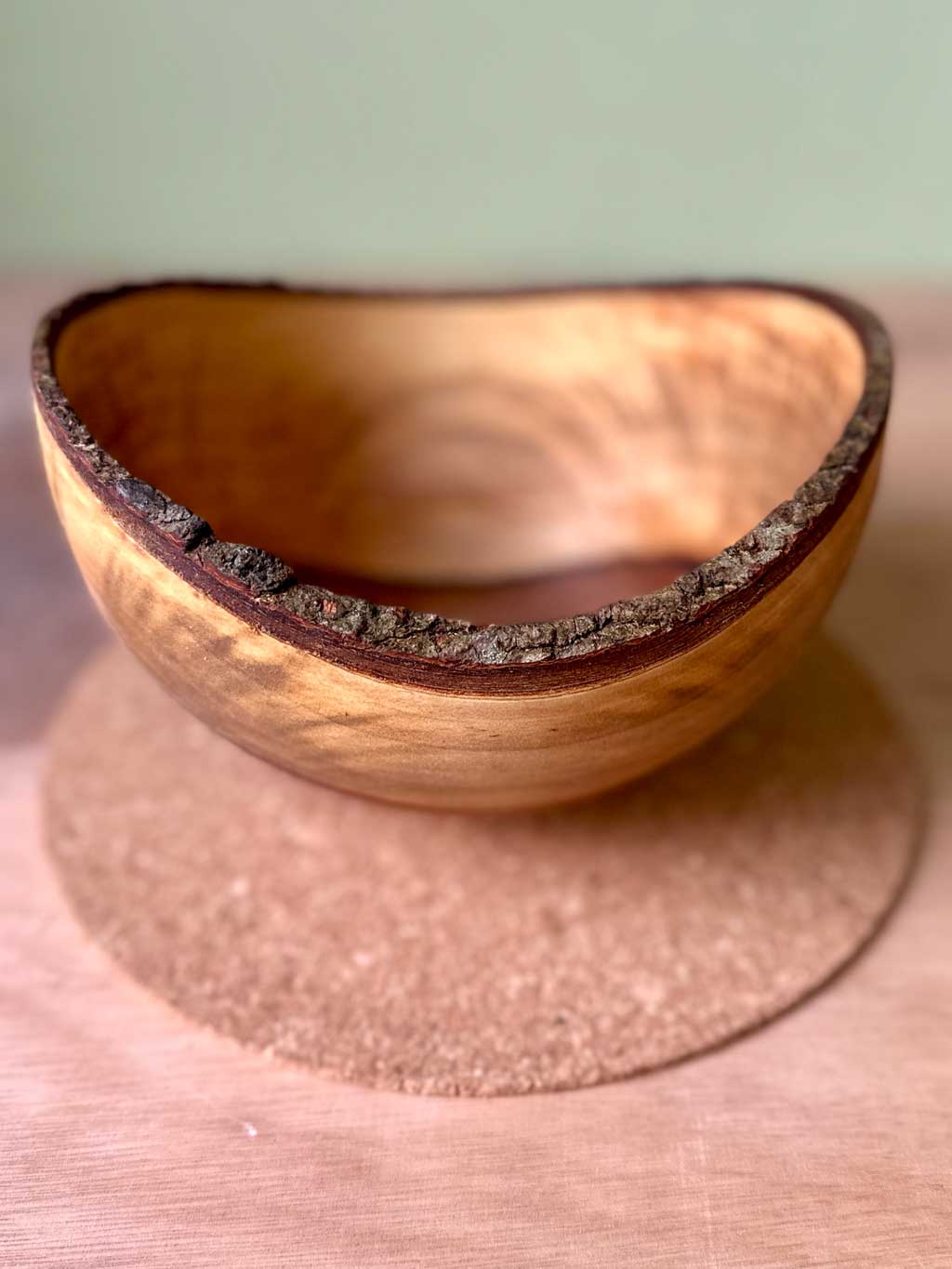
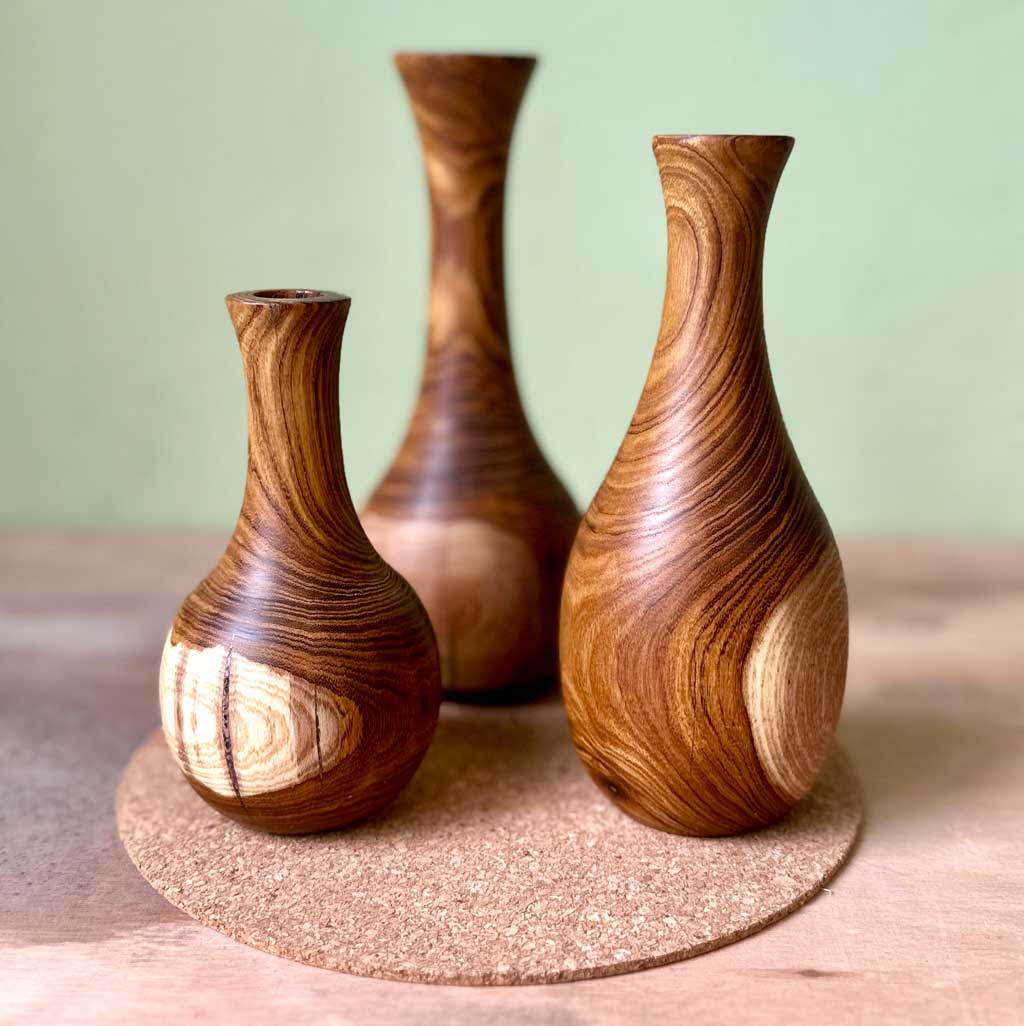
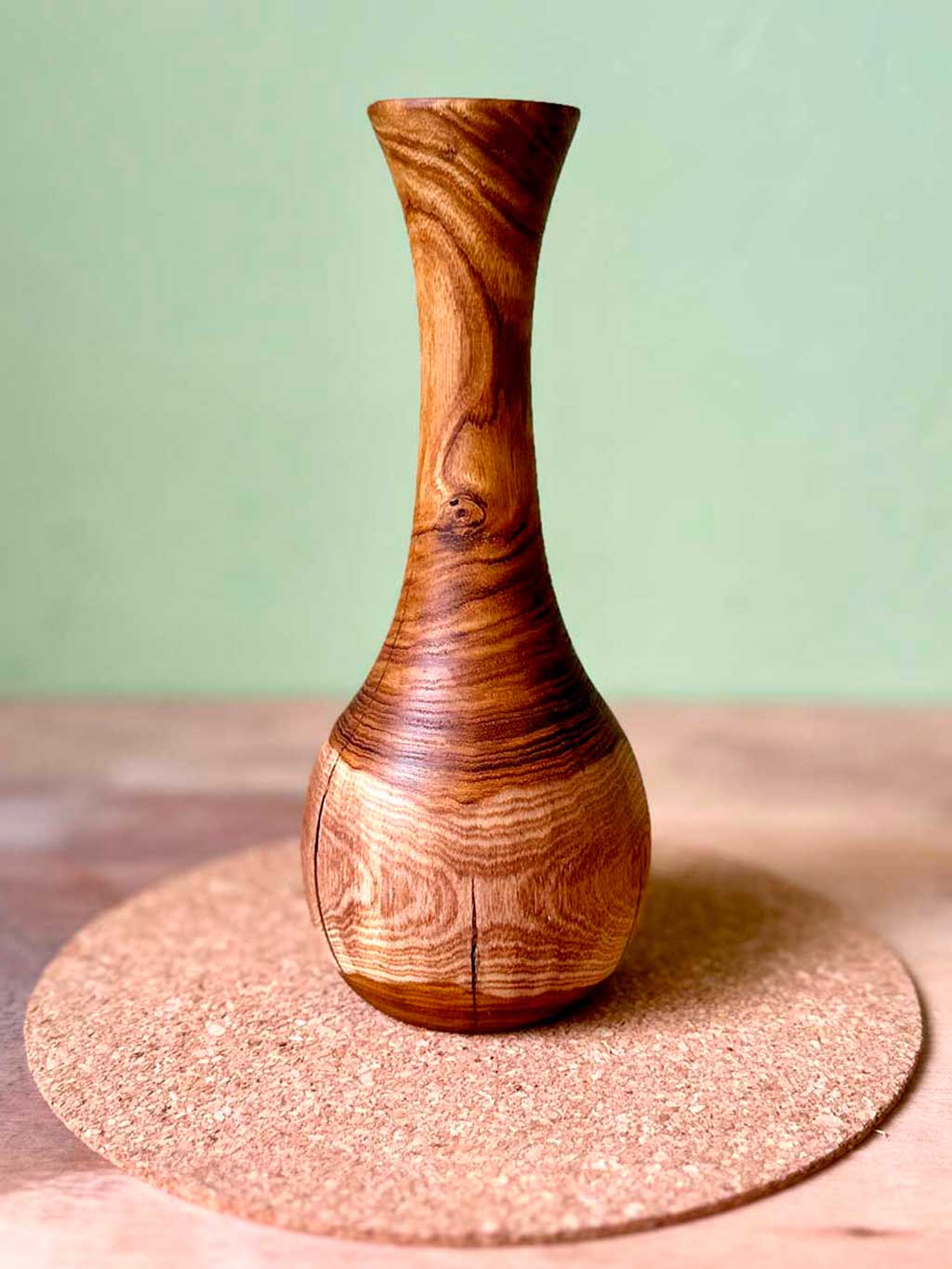
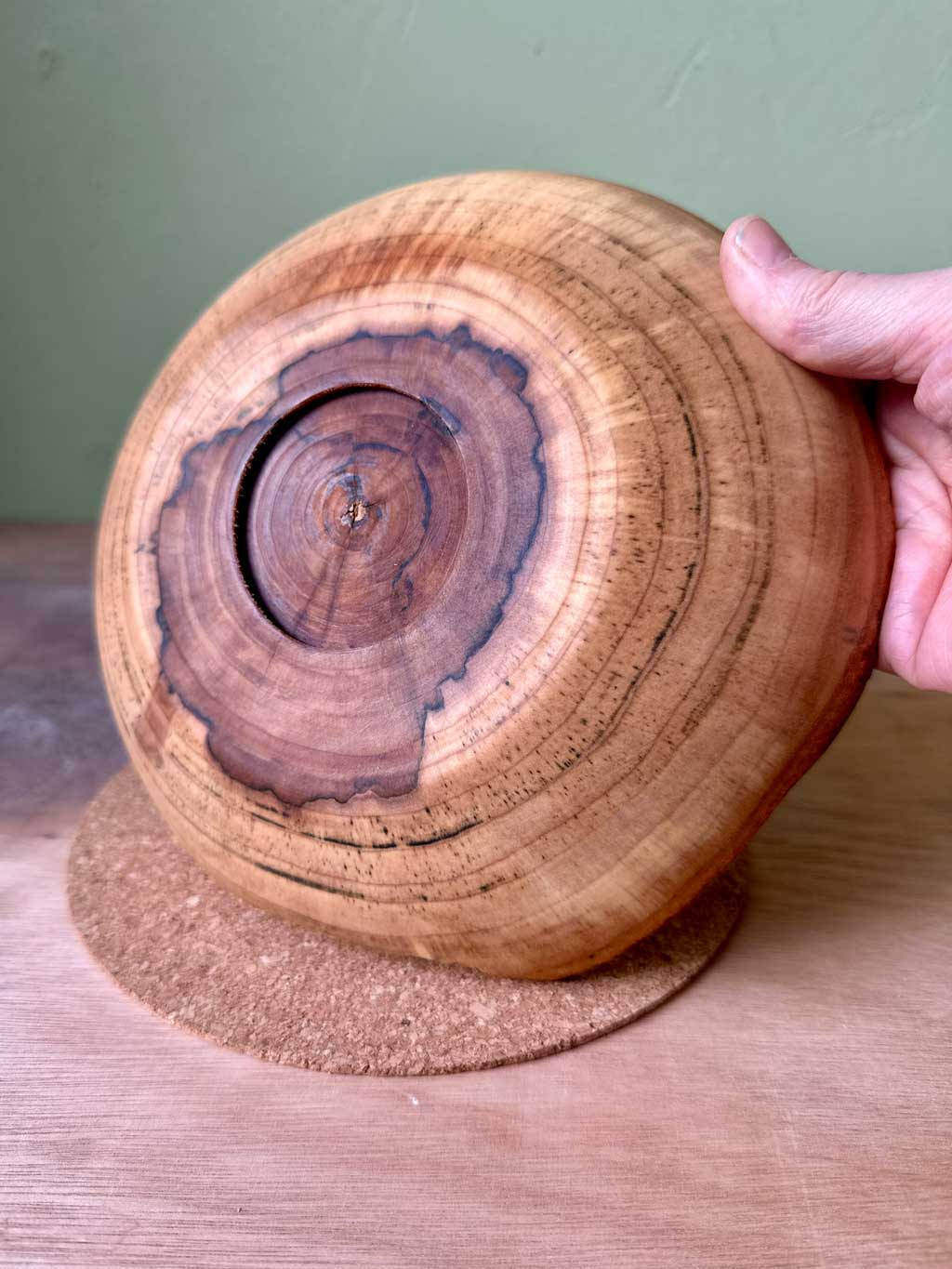
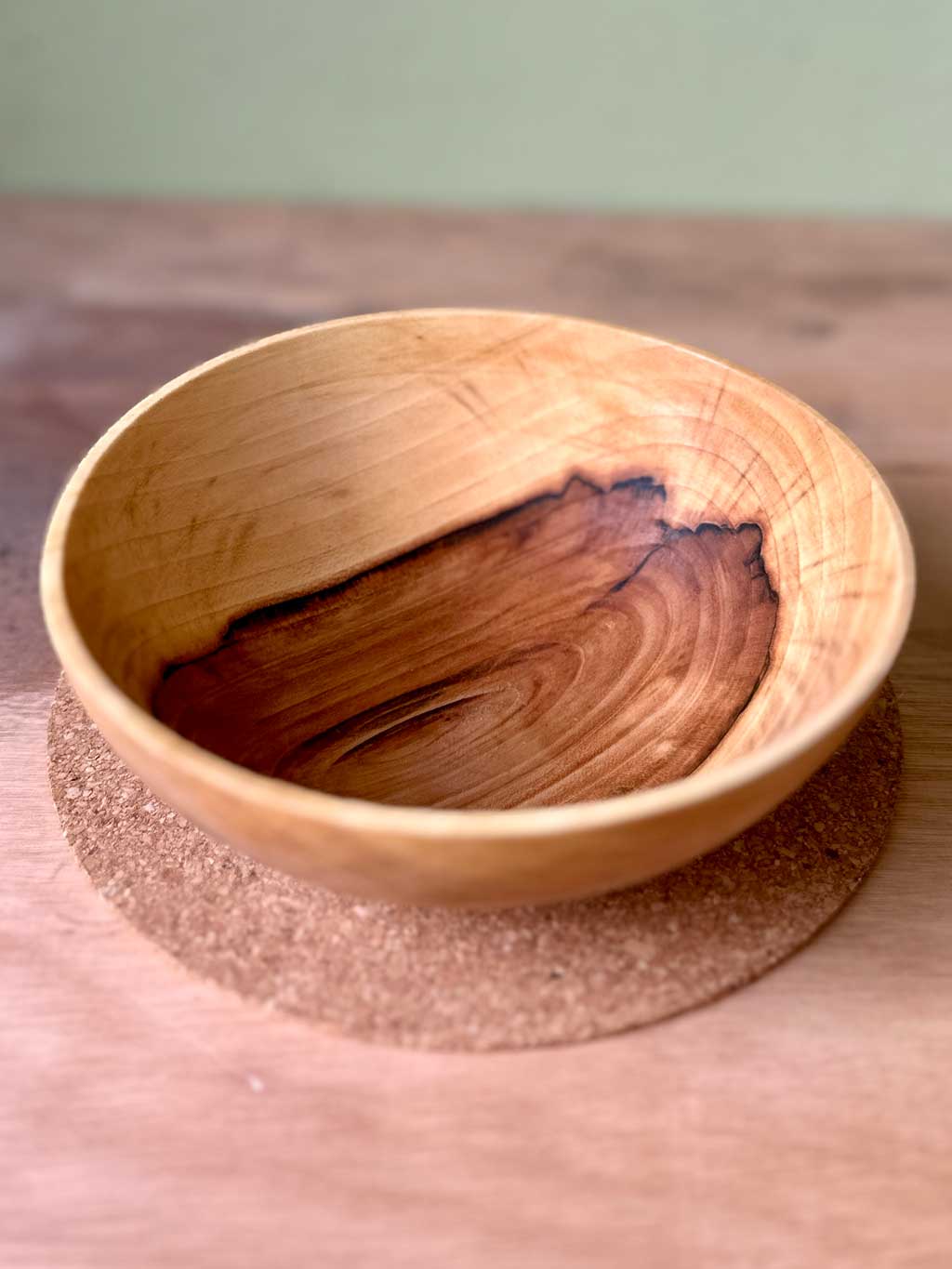
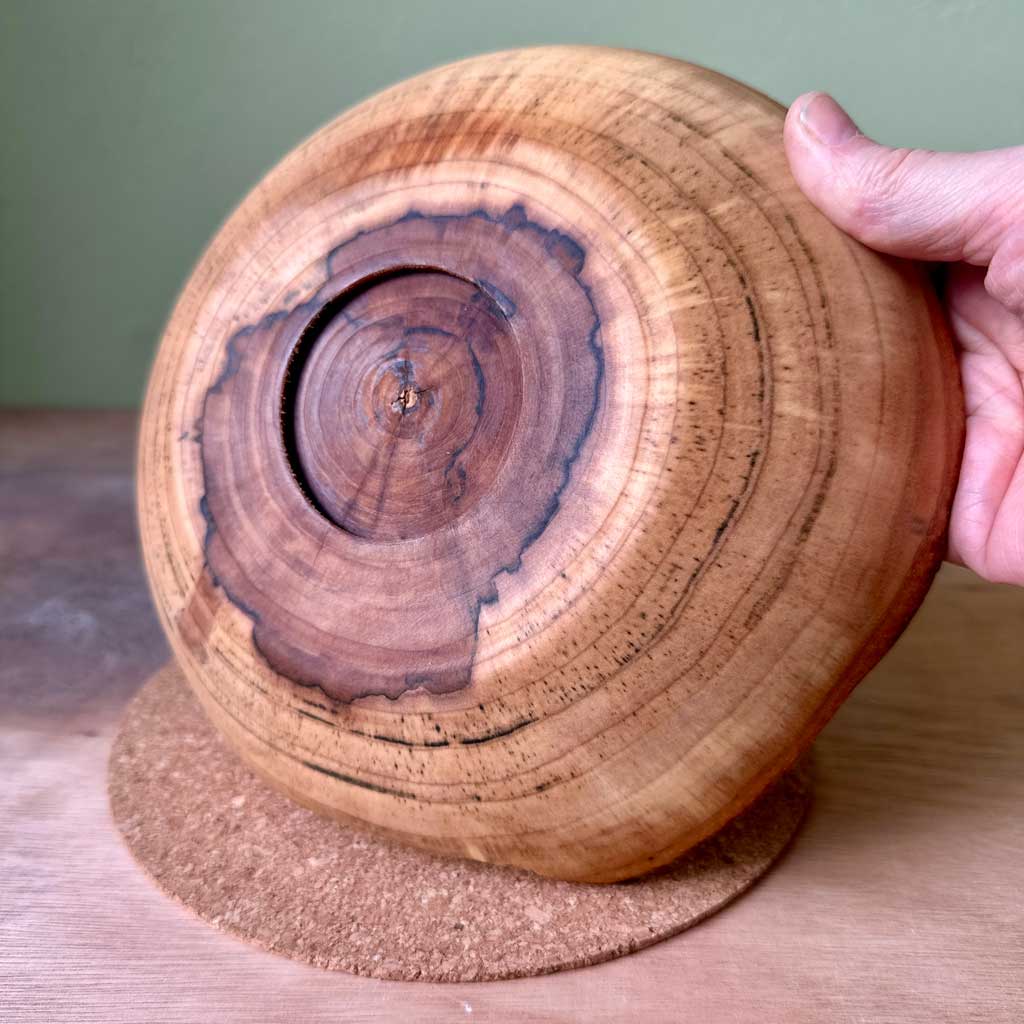
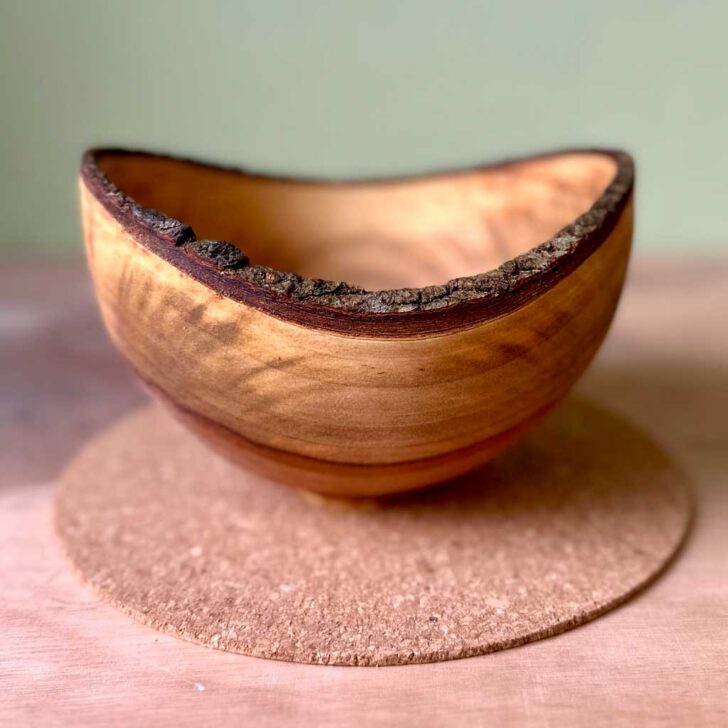
Held In Trio – Laburnum – These vases contain and support. The Held In Series explores the balance between positive and negative curvature. Held In I – Laburnum – 18 x 19.5 cm Held In II- Laburnum – 7 x 17 cm Held In III – Laburnum – 8 x 13cm SOLD Gathered – Sycamore – 14 x 9 cm. An end grain bowl turned thin to encourage subtle movement while retaining a calm, settled form. Becoming – 22 x cm. A bark-edged wide dish celebrating natural change and the boundary between tree and vessel. Rooted – Rowan – 17.5 x 7 cm. A shallow bowl centred around a dramatic area of heartwood that recalls the origins of the tree.
What Is Green Woodturning?
Green woodturning is the process of turning freshly felled or unseasoned timber on the lathe before it has dried fully. Because the wood still contains a high moisture content, it moves significantly as it dries.
This movement is often seen as a problem in conventional woodworking, but in green woodturning it can become one of the most interesting aspects of the process. Circular forms become oval, rims undulate and surfaces shift subtly over time.
For this collection, I wanted to embrace that unpredictability rather than resist it.
Why Does Wood Distort When It Dries?
Freshly felled timber contains a large amount of moisture within its fibres. As the wood dries, those fibres begin to shrink — but they don’t shrink evenly in all directions. Different areas of the grain contract at different rates, creating tension within the form.
This uneven shrinkage is what causes bowls and vessels to move as they dry. Circular rims become oval, walls twist subtly and forms can develop dramatic warping or splitting depending on the grain orientation and wall thickness.
The amount of distortion depends on several factors, including:
- timber species
- moisture content
- grain direction
- wall thickness
- drying conditions
- whether the pith is included within the piece
Traditional woodworking often tries to eliminate this movement by carefully seasoning timber before use. In contrast, green woodturning can intentionally embrace distortion as part of the creative process.
By turning pieces thin while they are still wet, movement becomes more visible and expressive as the timber dries naturally.
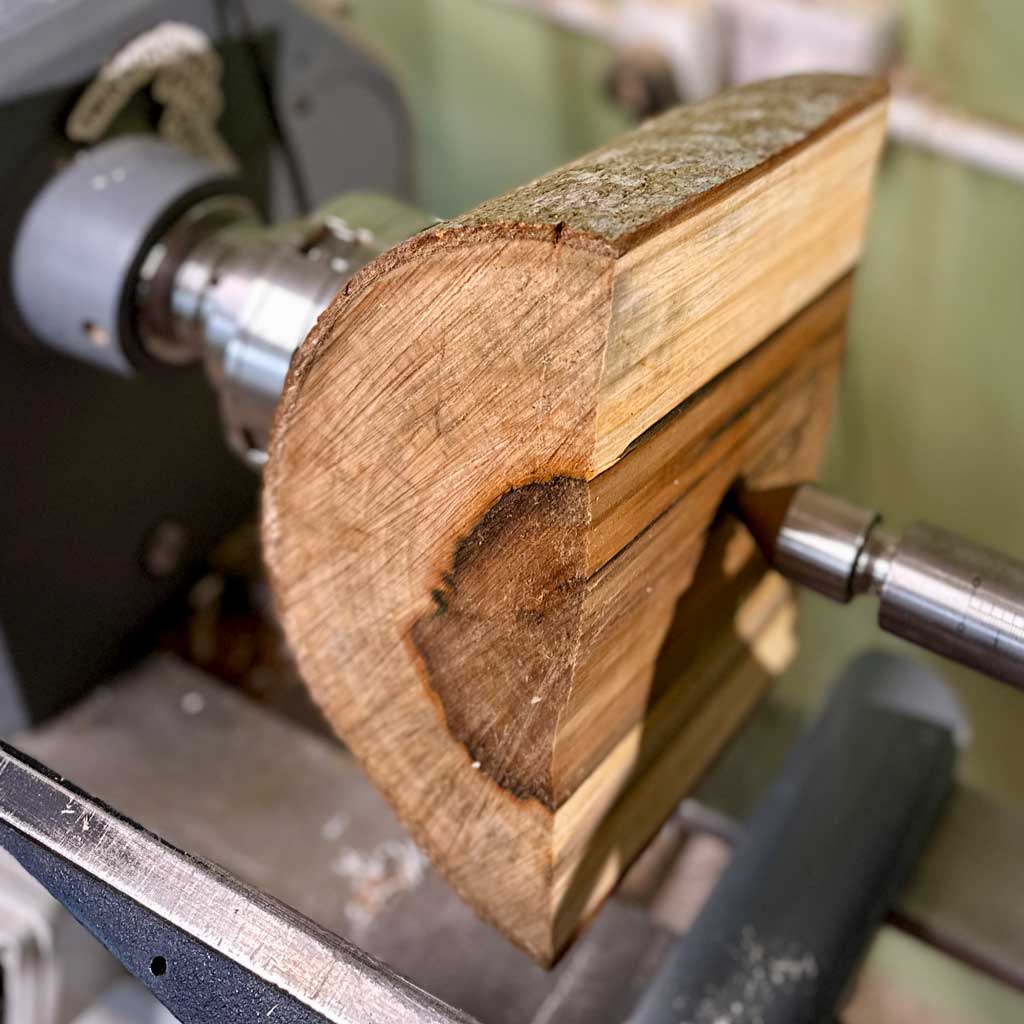
For future work, I’m particularly interested in exploring distortion by turning through the pith — the centre of the tree. Because this area is inherently unstable, it often creates more dramatic movement, asymmetry and natural splitting.
Working With Freshly Felled Timber and Natural Distortion
Many of the pieces in this collection were turned very thin to encourage movement during drying. Some retain bark edges or natural colour variation, while others highlight dramatic grain patterns created through the turning process.
The bowls and vessels sit somewhere between functional object and sculptural form. Certain pieces feel grounded and calm, while others appear to lean, stretch or fold slightly as the timber dries.
One of the most enjoyable aspects of the project was allowing the wood itself to influence the outcome. Rather than forcing identical forms, I began responding more directly to the timber — its grain direction, density, bark inclusions and natural tensions.
Although my original concept aimed to push distortion and asymmetry further, time constraints from teaching woodturning courses meant that some of the bowls remained relatively conventional in their construction. Even so, the process revealed a great deal about where I want the work to develop next.
Improving End-Grain Hollowing and Bowl Gouge Sharpening Techniques
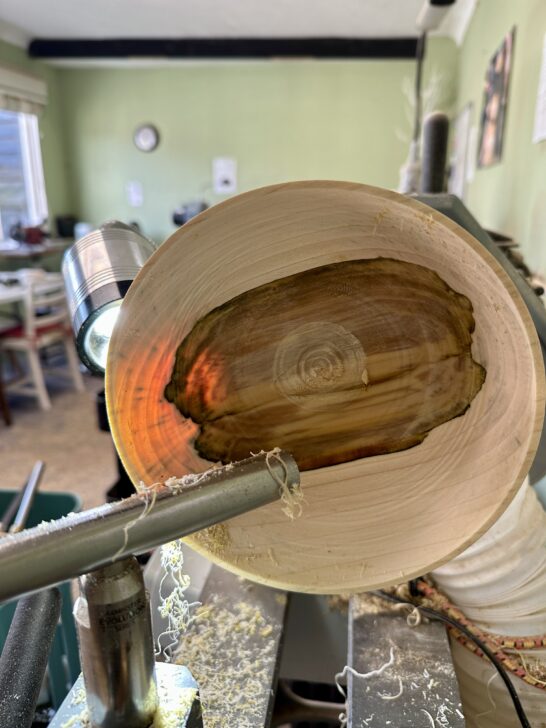
Alongside the conceptual side of the collection, the project also became an important technical learning process.
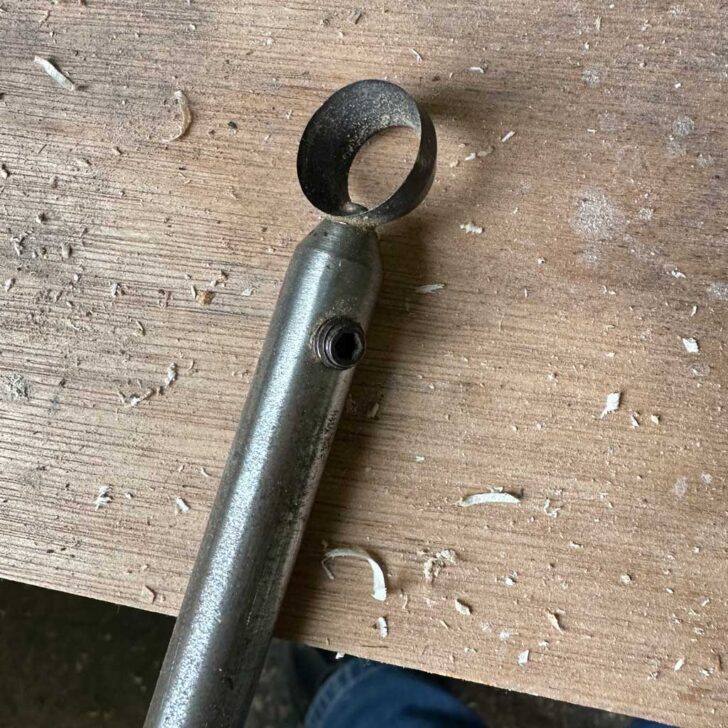
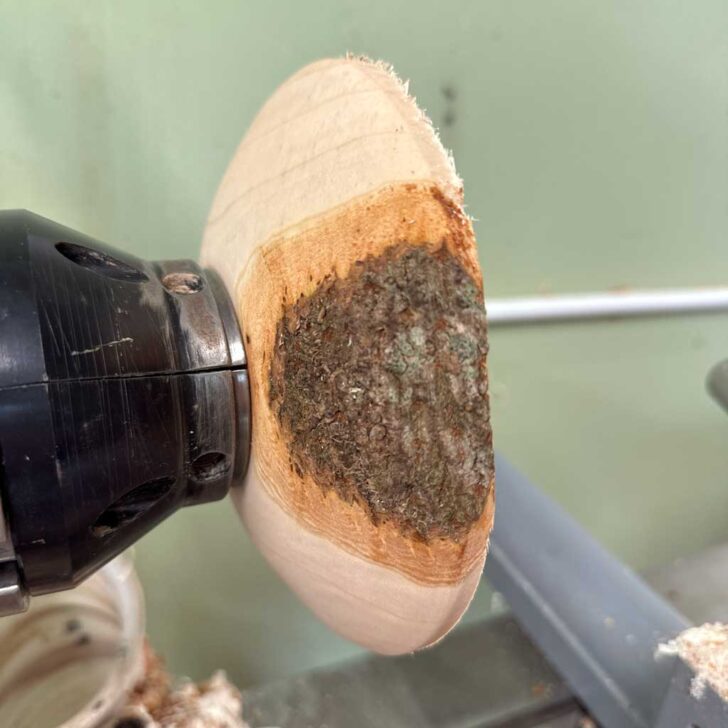
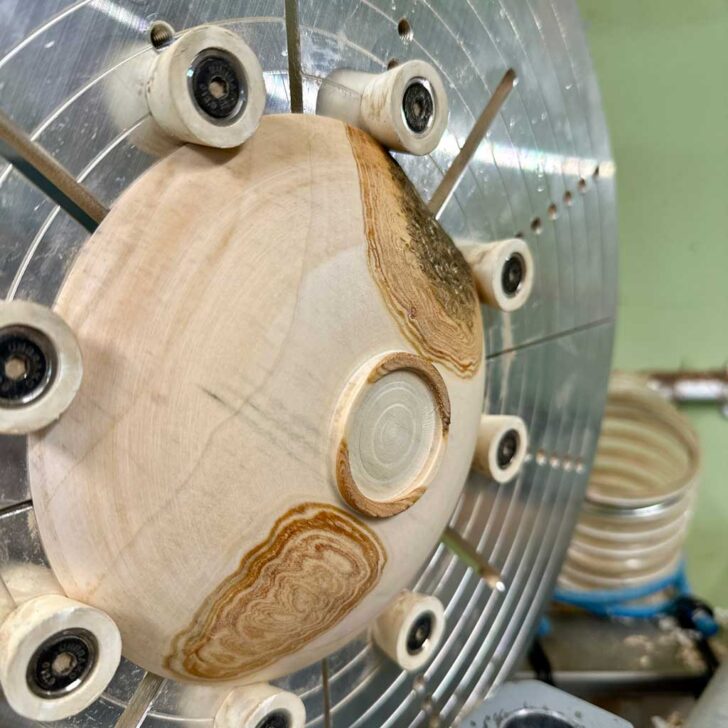
One area I particularly enjoyed developing was using a ring tool for end-grain hollowing. This allowed me to work more confidently on deeper vessel forms while improving surface finish and tool control. Hollowing end grain cleanly has always been technically demanding, so gaining more confidence with the ring tool opened up possibilities for taller and more refined vessel shapes in future work.
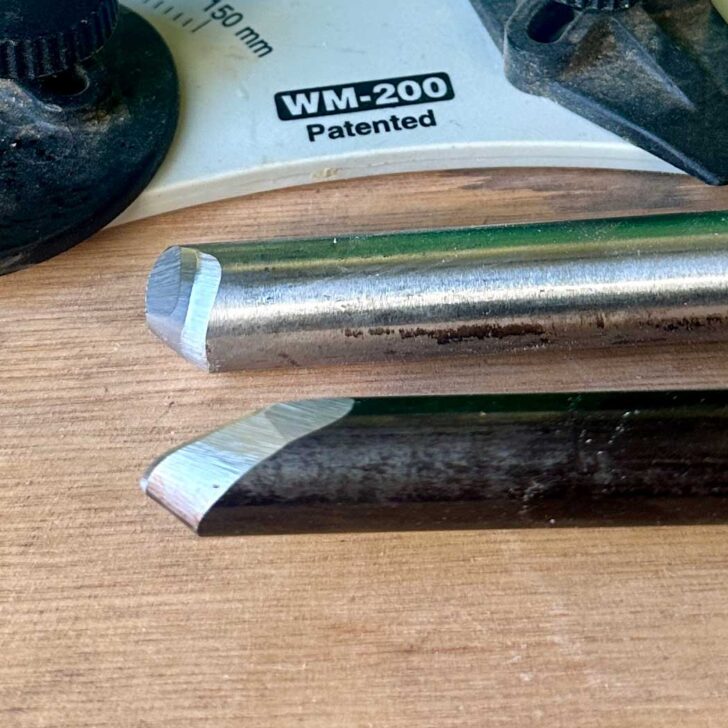
I also spent considerable time improving my sharpening techniques using my new Tormek wet sharpening system. Refining my bowl gouge grinds and sharpening consistency made a noticeable difference to the quality of finish coming directly off the tool.
That improvement changed the making process significantly:
- cleaner cuts
- less sanding
- better surface clarity
- finer flowing curves
- improved control on thin walls
It reinforced how essential sharpening is in woodturning — not simply as maintenance, but as a creative tool that directly affects the quality and character of the finished piece.
Exhibiting at The Base, Greenham
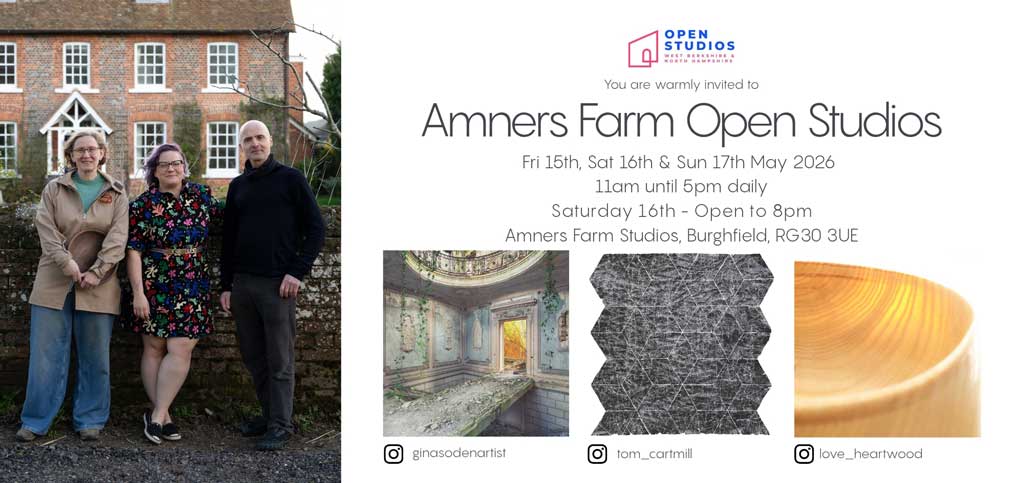
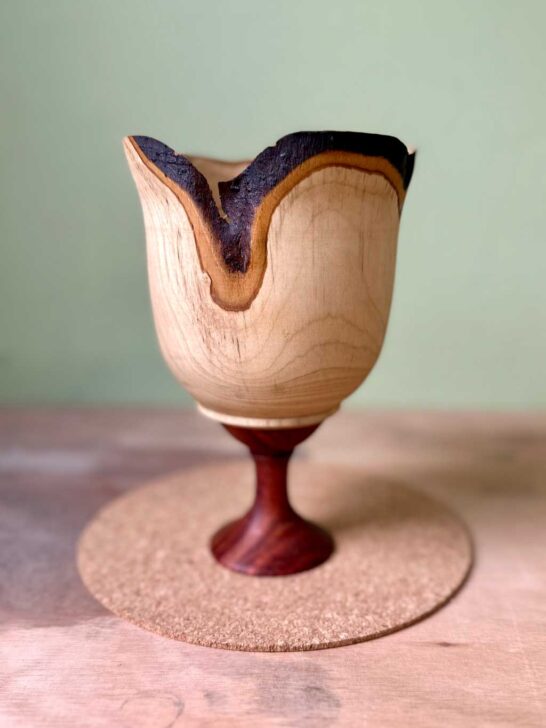
A selection of three pieces from this collection was also exhibited as part of the INSIGHT 2026 exhibition at The Base, Greenham during West Berkshire & North Hampshire Open Studios. Showing the work within a wider contemporary exhibition context was an important milestone for the project and gave me the opportunity to see the pieces displayed together outside the workshop environment.
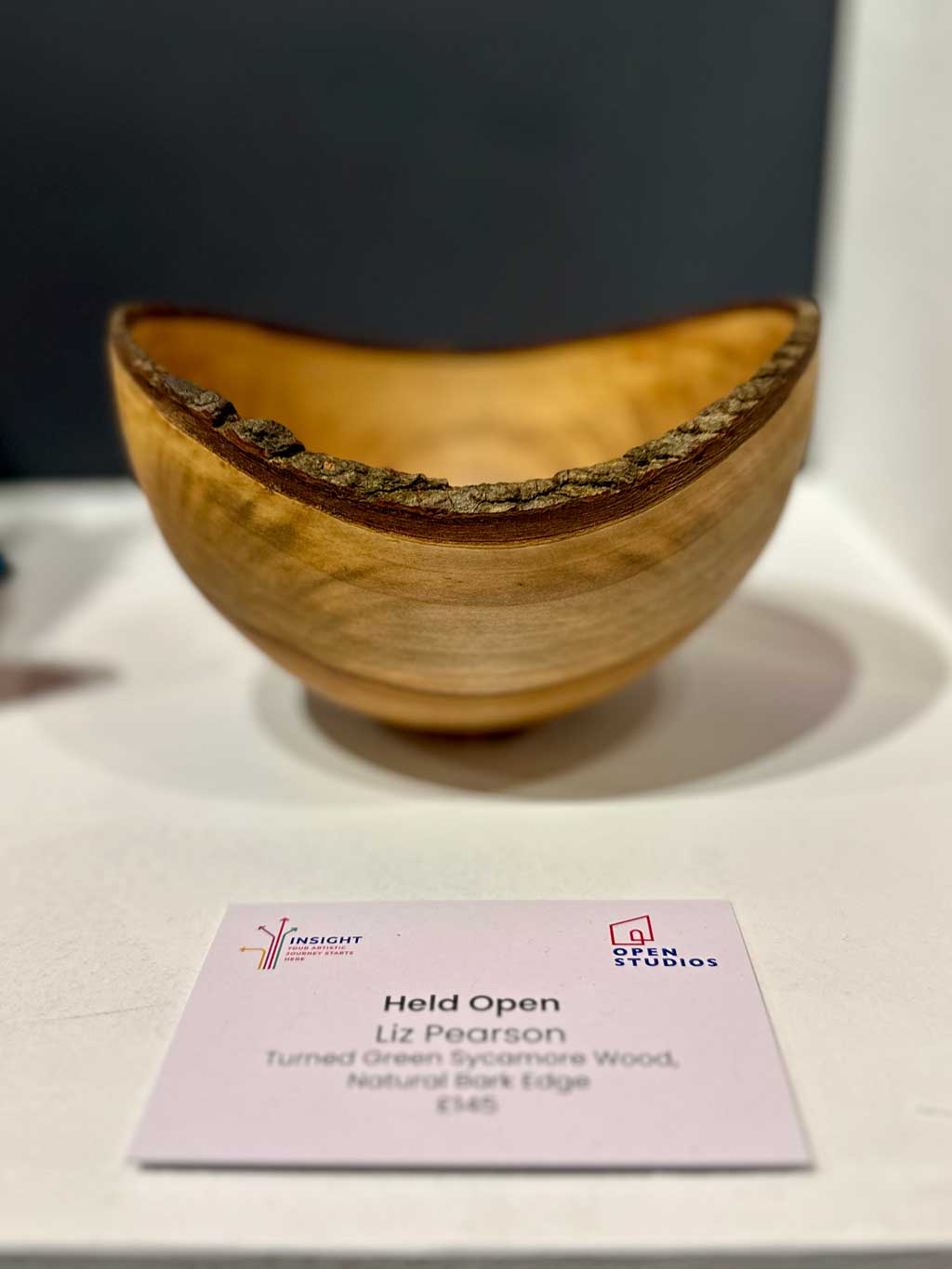
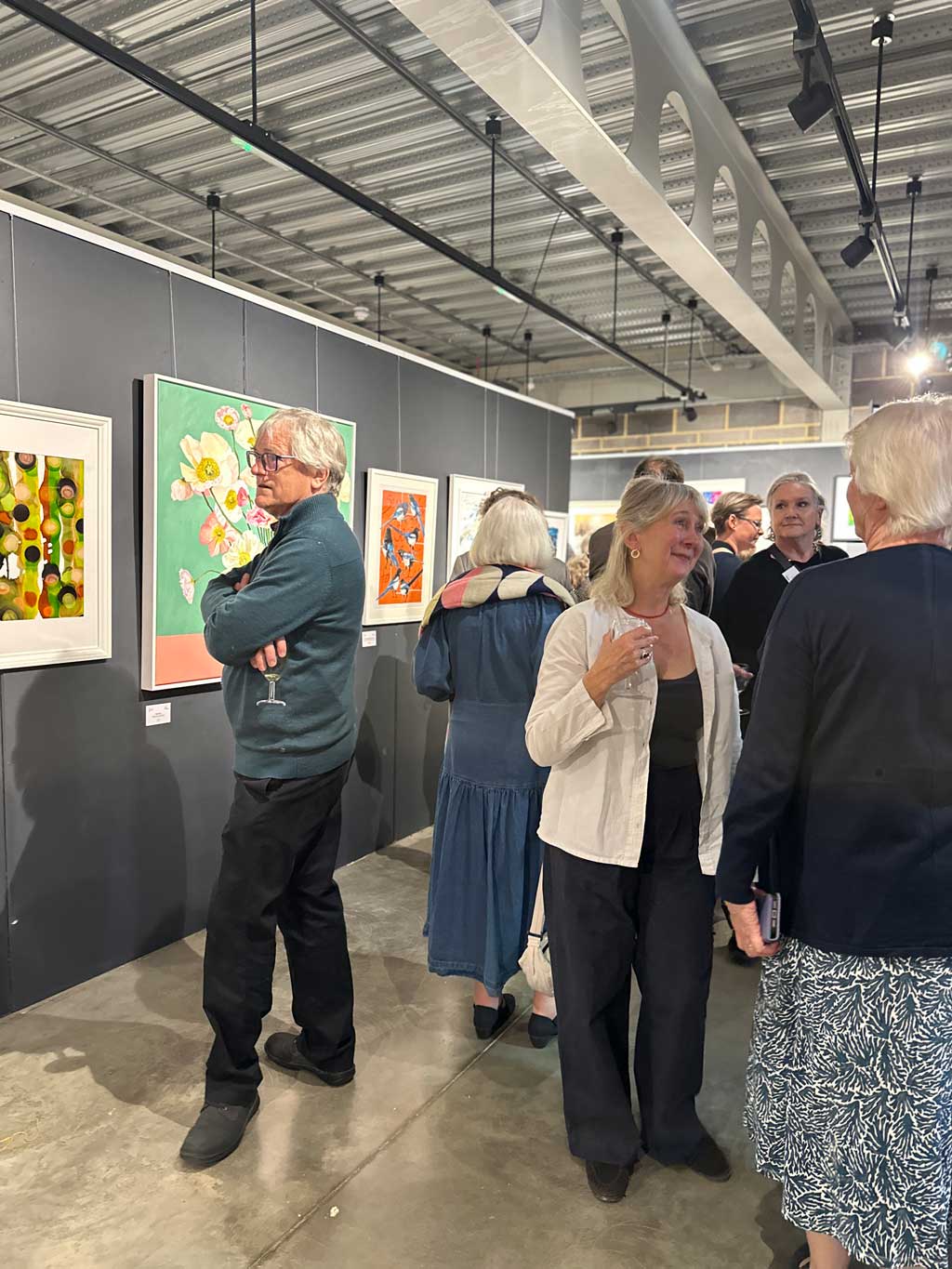
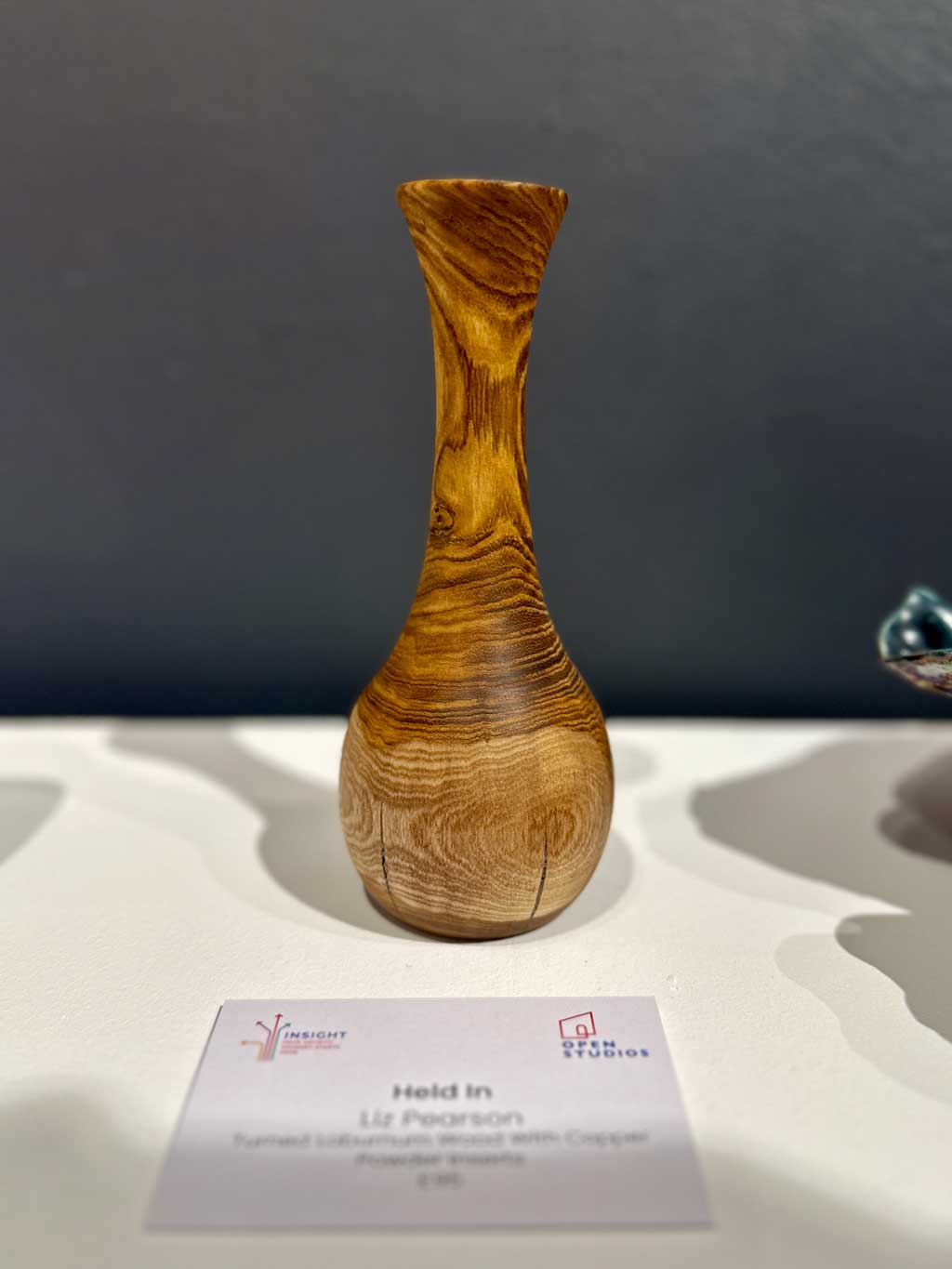
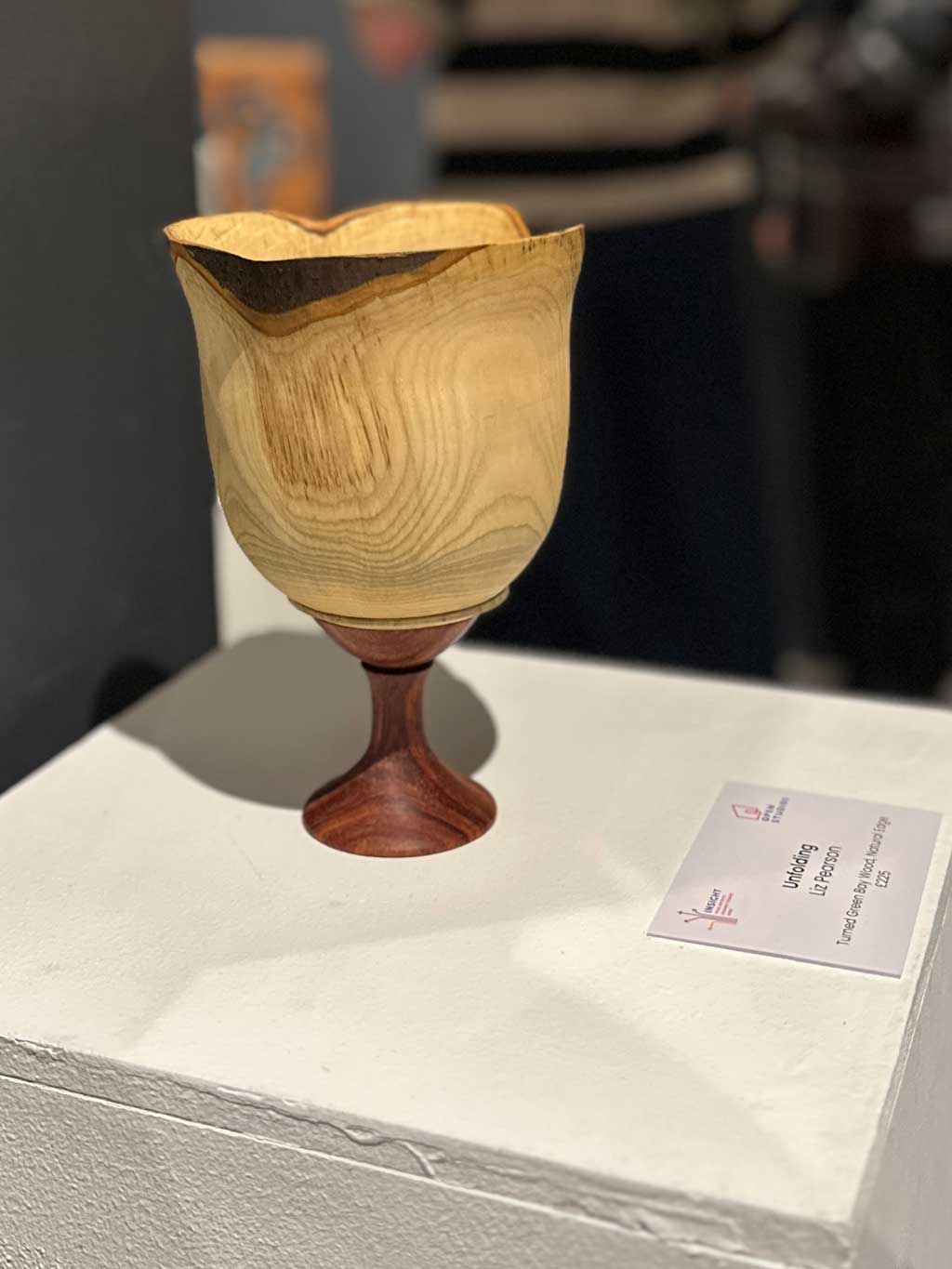
Experiencing the vessels in a gallery setting reinforced my interest in the space between functional craft and sculptural form. The subtle movement, asymmetry and surface detail within the pieces became much more apparent when viewed collectively, particularly alongside work from artists across different disciplines. It also highlighted which forms felt strongest visually and where I’d like to push the work further in future collections.
What I Learnt From Creating this Green Woodturning Collection
This collection taught me that the strongest work often comes from balancing intention with responsiveness.
Some pieces worked because of careful planning, while others succeeded because the timber behaved unexpectedly. The process reminded me that green woodturning is never entirely controllable, and that uncertainty is part of what gives the work energy and individuality.
I also learnt that technical confidence creates more freedom creatively. As my hollowing and sharpening improved, I found myself able to focus less on simply managing the process and more on exploring form and movement.
Perhaps most importantly, the project clarified that I’m increasingly interested in woodturning as more than purely functional object-making. While functionality still matters to me, I’m drawn to forms that communicate tension, softness, imbalance or growth through shape alone.
Exploring Distortion by Turning Through the Pith
Although this collection represents an important starting point, it still feels like the beginning of a larger exploration.
The next stage of development will involve pushing distortion much further by turning through the pith rather than avoiding it. Most conventional bowl turning methods intentionally exclude the pith because it increases the likelihood of cracking and dramatic movement. For future pieces, I want to embrace those risks more deliberately.
By turning across the pith and working with more unstable grain structures, I hope to create:
- stronger distortion
- more exaggerated movement
- natural splitting
- asymmetrical forms
- increased tension within the pieces
I’m particularly interested in how these more unstable forms might blur the line further between vessel and sculpture.
I would also like to continue developing:
- taller end-grain vessels
- thinner wall sections
- grouped sculptural forms
- bark inclusion work
- pedestal and elevated forms
- pieces incorporating multiple turned elements
This collection has reminded me that wood is never static. Even after the turning is complete, the material continues to move and respond to its environment. Allowing that process to remain visible feels increasingly important to my work.
Rather than trying to dominate the material completely, I’m becoming more interested in collaborating with it.
Several pieces from this collection are available for purchase directly.
If you are interested in acquiring a piece, please get in touch for current availability and pricing.
Learn Green Woodturning in Berkshire
This collection has also influenced my teaching. Exploring movement, grain direction, wall thickness and natural distortion through my own work has given me a deeper understanding of the material and opened up new approaches that I’m excited to share with students.
I’m developing a green woodturning course focused on working with freshly felled timber, understanding wood movement and creating bowls and vessels that embrace natural distortion rather than trying to eliminate it.
If you’re interested in learning more about green woodturning techniques, end-grain hollowing or turning thin-walled vessels, feel free to get in touch to register your interest in upcoming courses and workshops at Love Heartwood Turning School.